There are as many paths to becoming an author as there are people. You don’t need an MFA to become a good writer or get published. You need: critique partners, to be constantly reading, and the mindset of being a perpetual learner. Improve your craft, read your genre, and find people to give you reliable feedback.
I did all of this, but I was getting form rejections for years, no matter how much I improved. I was on the fourth draft of a novel and I had no clue what was wrong with it, I just knew something was wrong. My peers couldn’t help me, because they were in the same boat as me. I needed someone past me in their career to help me find my weaknesses.
I applied to PitchWars, Author Mentor Match, and the SFWA Mentorship program with no luck. There are workshops like Clarion and Odyssey, but I couldn’t afford the cost or time away from work, if I could even get in. Hiring a freelance editor for a developmental edit on my manuscript was an option, but the upfront cost is expensive for a full read. Plus, I needed more than a developmental editor, I needed a mentor. Finally, I decided to enroll in a two-year low-residency program that was mostly online. Student loans add up, but the payments and interest rates are more manageable than the personal loans I’d have to take on to pay for the alternatives, and the course being low-residency meant I got to keep my day job.
Student loans add up, but the payments and interest rates are more manageable than the personal loans I’d have to take on to pay for the alternatives, and the course being low-residency meant I got to keep my day job.
At first, I thought I’d made a terrible and expensive mistake. I was more advanced than what was being covered in class. Workshop was often emotionally brutal. Not because of my peers, we were all just doing our best, but because being critiqued and giving critiques so often and at such a fast pace was rough. Before the program, I had critique partners and was part of a critique group, but this was on another level in that it was weekly with weeklong discussions, and we each had to submit three short pieces a semester. Practicum is why I really enrolled, though—-a one on one mentorship between a professor and student. That wasn’t going well, either. My teacher wasn’t the right fit. I wasn’t getting the craft deep dives I knew I needed to improve.
Things got better after the first semester. I asked to switch practicum professors and immediately felt the benefits. Workshop felt easier, too. After the first year, I developed a better intuition about what feedback was useful and what wasn’t, and I believe I became a better critique partner by learning what to focus on. Instead of giving prescriptive advice, I learned to ask myself what the other person was trying to accomplish and how I can help them get there.
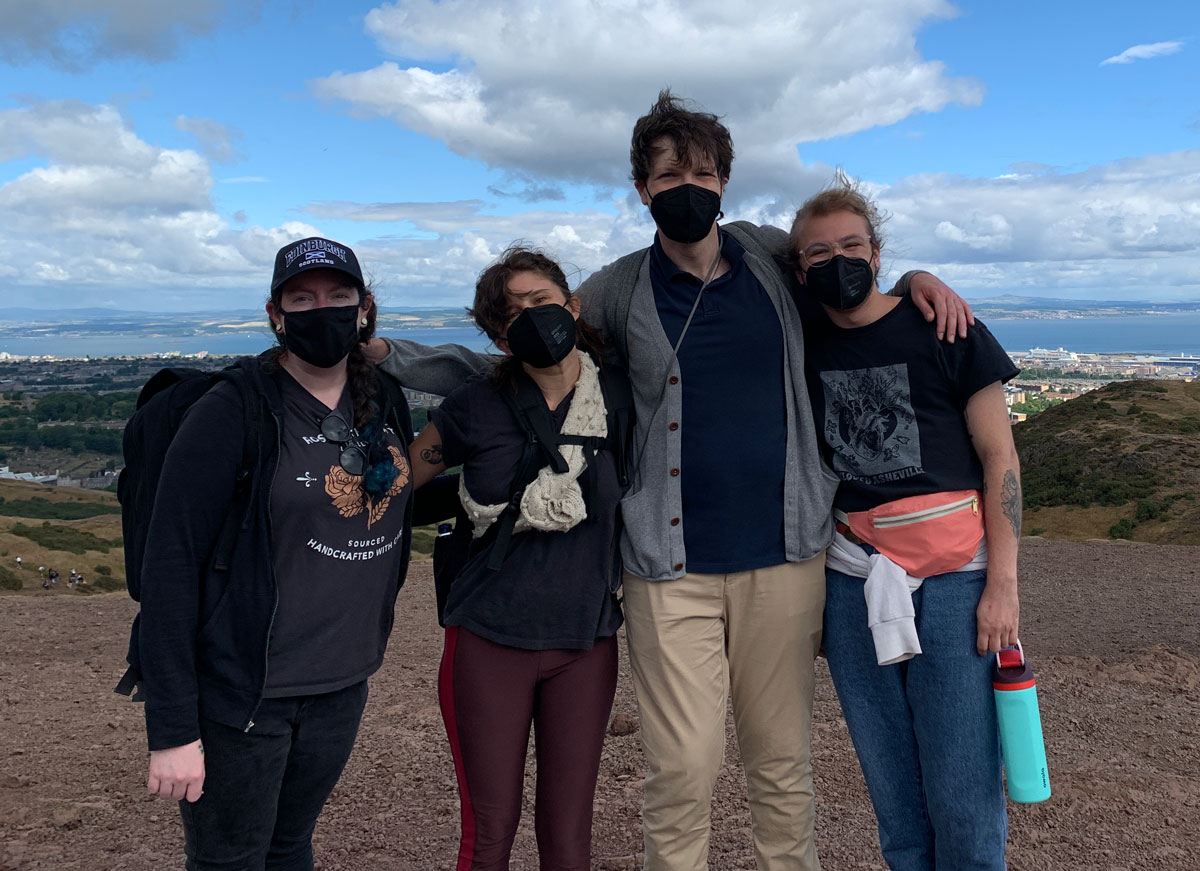
We had a weeklong residency in Edinburgh, Scotland, which was awesome and awful in equal measure. I have intense social anxiety (most writers do, right?) and it was in the middle of a COVID outbreak in the city. But I learned a lot. One, not all airplanes explode. Two, I regretted not spending more time with more classmates. I won’t get that time with them back. It was a lesson I needed to learn. And I love Edinburgh. It’s such a cool city and I wish I could live there. I visited cemeteries, book stores, a castle, highland cliffs, and an underground close. I hope I can go back one day.
Practicum was what made this program worth it to me. I had an incredible mentor. I knew I needed help with revision—-I could fart out 100 first drafts. My problem was I didn’t know how to fix the fundamental issues and create the second draft. Thanks to her, I know what questions to ask myself and I know more about character arcs and theme than I did going in.
So, was it worth it? It was for me. If you’re thinking about getting an MFA, I recommend asking yourself what you want out of the program. Maybe your needs can be met elsewhere, but if not, find a program that can offer you something you can’t accomplish on your own. For me, it was mentorship to help me get past the weaknesses that were invisible to me, and that’s what I received. It remains to be seen if I’ll ever get published, but I feel I’m a better writer now, and that’s what ultimately matters to me.